
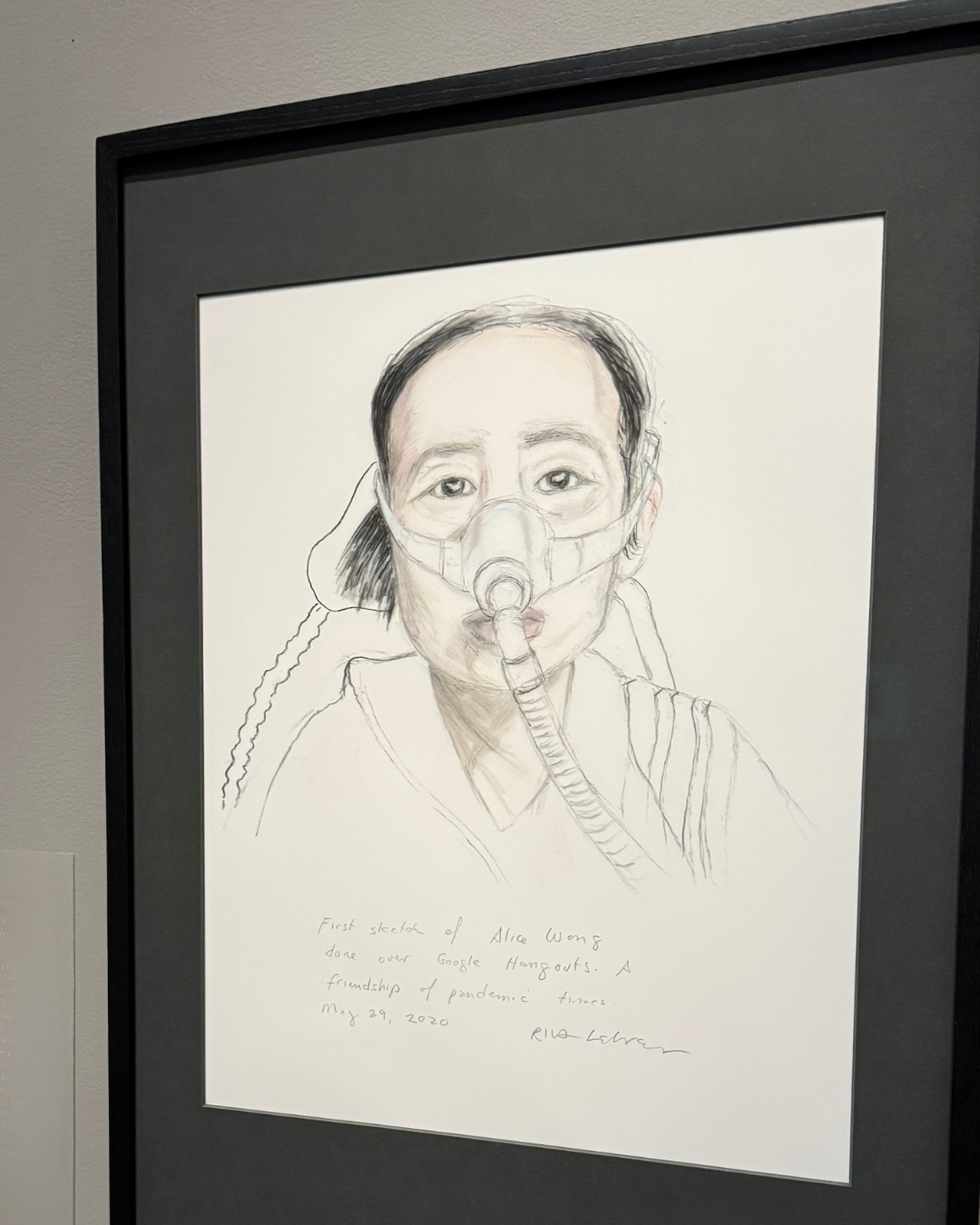
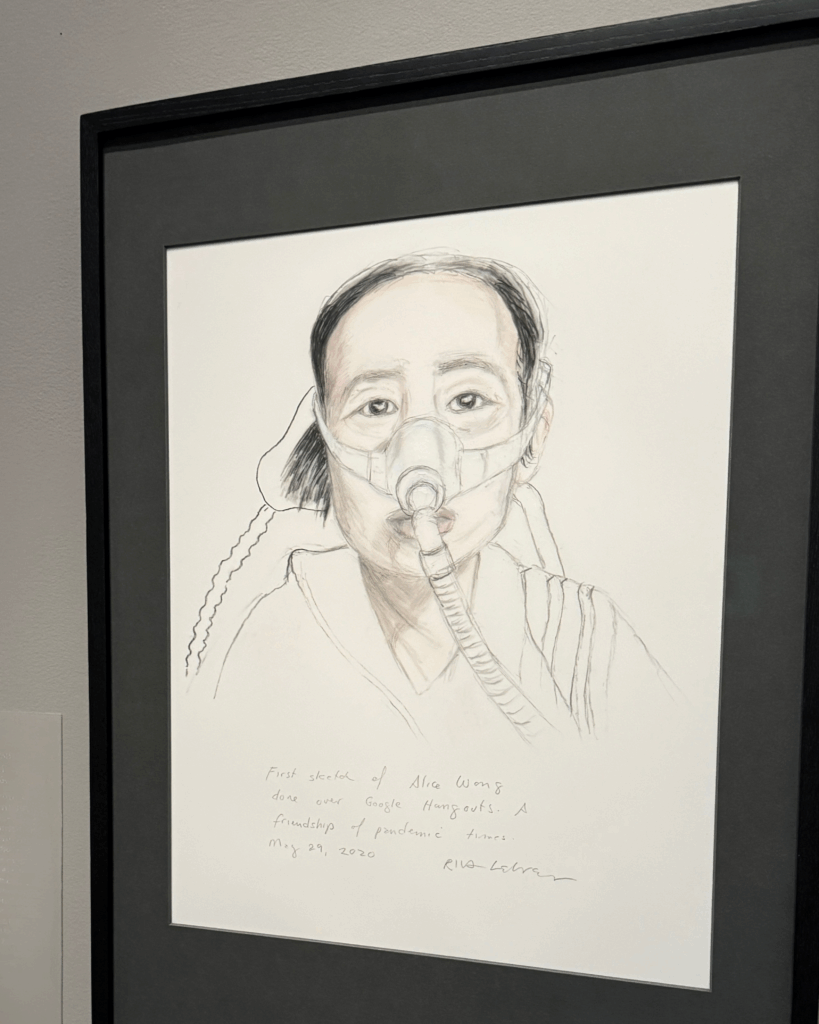
 We are still processing the crushing news about CommunicationFIRST friend and Advisory Council member Alice Wong, who passed away on Friday, November 14, 2025. In doing so, we would like to amplify some of Alice’s work as well as the particular impact she had on the CommunicationFIRST community as an AAC user, beginning with her final online statement:
We need more stories about us and our culture. You all, we all, deserve the everything and more in such a hostile, ableist environment. Our wisdom is incisive and unflinching. I’m honored to be your ancestor and believe disabled oracles like us will light the way to the future. Don’t let the bastards grind you down. I love you all.
After Alice became an AAC user in 2022, she joined CommunicationFIRST’s Advisory Council and made us better for it. “Alice was incredible to work with and learn from. She understood the wisdom of AAC users existing in a world not built for us, and wanted to create a space where we could own the narrative for change,” said our Board Chair Jordyn Zimmerman.
In May 2024, Alice presented about ableism to the Future of AAC Research Summit reminding us as AAC users that “we belong in public, holding court in conversations, doing our thing, our access needs respected, and being our full selves unapologetically.”
“While I am still evolving and discovering new aspects of life without speech,” Alice said, “I believe AAC users can collectively bend conventional modes of communication, practice crip time, teach speaking people to slow the fuck down, and have us centered for once instead of at the margins. That’s my dream so that other newbies don’t have to experience what I did.” Her remarks were published in the journal Augmentative and Alternative Communication.
CommunicationFIRST Board member Lateef McLeod was a long-time personal friend of Alice’s and helped mentor and support her as a person who came to need to rely on AAC later in life. He commented, “Alice was an extraordinary human being with countless accomplishments, especially with her phenomenal writing career. She was also an awesome friend, and I can’t count the countless times she gave me encouragement and supported me during our friendship. She surrounded herself with a community that truly loved her, and I was honored to be a member of that community.”
In October 2024, Alice won a prestigious MacArthur Fellowship; we believe she was the first AAC user to do so. This honor helped to further increase the visibility of AAC.
Alice especially supported the part of CommunicationFIRST’s mission that involves changing the narrative about how society views, understands, and treats people who cannot rely on speech alone to be heard and understood. She understood that the best way to do this is to tell our own stories: “I think of storytelling as a chance to know ourselves better, to really question who we are, where we've been, and who we want to be.”
As Alice wrote in her best-selling memoir, Year of the Tiger: An Activist’s Life (2022), “each person has an entire universe of stories inside of us. So my question to you all is, what is your story and how do you want to share it with the world? … [W]hen you are ready to share, it’ll be out there with other disabled narratives pushing back at the status quo.”
Last month, Alice told her own story about losing the ability to speak on a Radiolab episode called “Voice.” A transcript of the episode’s segments with Alice can be accessed here.
To encourage the telling and sharing of more stories by people who need and use AAC, she contributed behind the scenes to CommunicationFIRST’s See Us, Hear Us Project.
“I became an activist by telling my story and centering my lived experience as expertise,” she said in 2019. She added, “I take action because I want change for us by us.” In 2020, Alice was also a featured speaker in the Virtual Crip Camp Experience where she shared her wisdom with other disabled people about how to use social media to make change, including creating hashtags for activism. (Alice’s presentation begins about 42 minutes into the captioned, ASL-interpreted, Zoom recording; the password is 1l?OC4P*.)
Alice wrote prolifically about disability justice and the need to recognize the full personhood of disabled people. Her work has had a far-reaching impact on disability cultures. Alice’s blog, Disability Visibility Project, and her many essays in Teen Vogue and The New York Times remain online. Themes in her writing include the importance to disabled peoples’ survival of public health measures like wearing masks in public; speaking out against mask bans; medical rationing and electricity rationing; the intimacy of care work and what it is like to rely on personal care assistance throughout the day; living with chronic pain; anti-racism; mentorship of Asian Americans with disabilities; cooking and recipes; and a vision for collective thriving that a fully inclusive community can bring when we remake ourselves with that in mind.
We encourage our community to become familiar with all of her work.
In a post on Facebook, CommunicationFIRST co-founder Bob Williams said that Alice’s “legacy is one we must constantly build out.” To “honor the life, struggles, and work of Alice Wong who looked deep into our eyes, history, and culture,” Bob shared this poem, written decades ago when he was a court-appointed monitor overseeing the closure of the Forest Haven institution:
Stories To Be Told
I have stories,
stories to be told.
Placed on reserve,
in between the accordion file
silences
of my life.
Left untouched,
unseen,
unheard,
unfelt
for years.
Gathering dust
amidst the dog-eared
half complete stanzas
that
I also may
read to you.
Someday.
Download post in PDF form here. Access post via Google Doc here.
[Image: Riva Lehrer’s “Zoom Portraits: Alice Wong (Study)” in The Struggle for Justice exhibit at the National Portrait Gallery in Washington, DC. Lehrer described the image: “First sketch of Alice Wong done over Google Hangouts. A friendship of pandemic times. May 29, 2020.” Drawn with graphite and colored pencil, Alice has a neutral expression while connected to a ventilator with her hair pulled back. Photo credit: Tauna Szymanski]