
 The Keeping All Students Safe Act, or “KASSA” (H.R. 6617/S. 3448), is bipartisan federal legislation reintroduced in December 2025 to establish clear, enforceable limits on restraint and seclusion in schools that receive federal funds. KASSA recognizes that restraint and seclusion are dangerous, trauma-inducing practices that disproportionately impact students with disabilities.
How KASSA Protects Students
According to U.S. Department of Education data, although students with disabilities represented 14 percent of all students in the 2020-2021 school year, they made up 81 percent of students who were physically restrained and 75 percent of those who were subjected to seclusion by school staff. Government investigations have documented that restraint and seclusion can restrict breathing and blood flow, cause severe psychological trauma, result in serious injury and death, and contribute to lost instructional time.
The Keeping All Students Safe Act Would:
-
- Ban seclusion outright in schools that receive federal funds
- Prohibit instances of physical restraint that are planned in advance
- Strictly limit when physical restraint may be used to narrowly defined emergencies
- Reduce harm when restraint is used by requiring minimum safety standards and staff training and certification
- Strengthen oversight and accountability by requiring states to establish policies and monitoring systems related to the use of restraint and seclusion in schools; and
- Enhance transparency and enforcement by implementing mandatory statewide data collection and annual public reporting.
KASSA’s Impact on Students with Speech-Related Disabilities
Restraint and seclusion cause significant harm to people with speech-related disabilities. Physical restraint and seclusion often prevent communication for students with speech-related disabilities by limiting students’ ability to use their most effective means of communication, including augmentative and alternative communication. KASSA would ban all restraints that interfere with a student’s primary form of communication.
Seclusion and Restraint Among People with Communication Disabilities
For many students with speech-related disabilities, what is perceived to be “maladaptive behavior” leading to restraint or seclusion may be the only way they have to communicate unmet needs, sensory overload, anxiety, pain, or trauma. Yet, current systems often respond to such communication with force or isolation rather than access, support, and robust, language-based communications tools.
How You Can Support KASSA and Take Additional Action to Combat Restraint and Seclusion
-
- Contact your legislators’ offices to advocate for the passage of KASSA and affirm students’ rights to safety and dignity in schools. CommunicationFIRST’s Policy Advocacy toolkit can help you learn how to find and contact your elected officials.
- Amplify the voices of people with speech-related disabilities by ensuring that those most impacted are leading discussions and decision-making around the use of restraint and seclusion. You can start by reading this 2021 piece written by India Ochs, Past-Chair of CommunicationFIRST, titled “Speak up for KASSA and Keep Our Kids Safe” on our blog.
- Prioritize communication access for students with speech-related disabilities by educating IEP teams, school teams, and policymakers about how restraint and seclusion threaten expressive communication and may disproportionately harm students with speech-related disabilities who have been denied access to robust, language-based forms of communication.
- Share personal stories and information with your legislators and others in your community about the dangers of restraint and seclusion. CommunicationFIRST partners, including the Alliance Against Seclusion & Restraint and the Council of Parent Attorneys and Advocates, have created templates to help you.
We wrote a KASSA two-pager with the information listed above. Access it in PDF and Google Doc forms.
You can also access this post in PDF form here, and access it via Google Doc here.
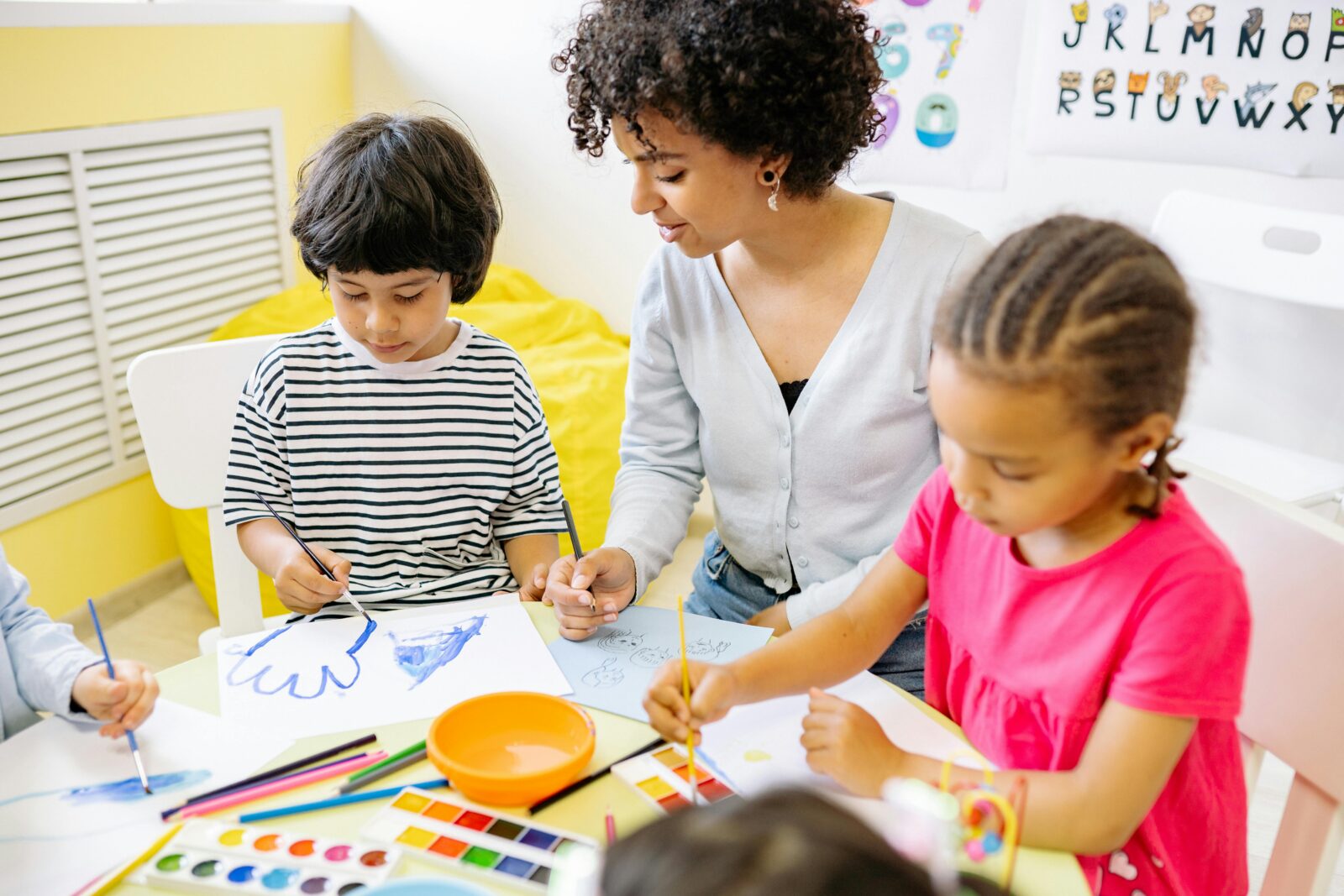
[Image: Young children sit at a circular school table and paint. A teacher sits with them, smiling at one of the paintings.]