
 What AAC users and our allies should know—
and what we can do about it!
On August 21, 2026, the Centers for Disease Control and Prevention (CDC) proposed changes to the National Health Interview Survey (NHIS) that would make it harder for people with disabilities to be counted. This could hurt our ability to get services and supports. You can help by sending in comments against these changes; comments are due Monday, October 19.
Every two years, the CDC gathers important data about health and disability in the United States through the NHIS. We use NHIS data to study patterns in disability, health, and healthcare access over time. That information helps the government decide how much money goes to programs and services that help disabled people, including people with speech-related disabilities.
The changes that the CDC wants to make would remove questions about many kinds of disabilities, health conditions, and assistive technology. If the changes are approved, no questions would be asked on the NHIS about mobility aids, fine motor problems, sign language, anxiety or depression not treated with medications, fatigue, and almost all of the characteristics that could be used to identify people with intellectual and developmental disabilities (I/DD). Many questions about chronic health conditions—including ones common in our community such as ADHD, immunocompromise, and Alzheimer’s—would also be removed.
We don’t get data like this anywhere else, because gathering this data is the job of the NHIS. There are many different national health surveys, but each one gathers information from different sources, about different topics, and in different ways. Compared to other nationally representative health surveys, the main strength of the NHIS is the sheer range of topics covered with questions answered accurately, thanks to the presence of trained interviewers. When the NHIS does its job, we can use its data to answer complex research questions about health and disability in context. For example, do people who need AAC have more difficulty getting access to AAC when they are older or younger, or in different parts of the country? What if they only speak Spanish, or if they have multiple disabilities?
If survey questions that capture the diversity of disabled people are cut, we can’t just find answers to these complex research questions somewhere else: that data will simply disappear.
In fact, there are no other national surveys that count people with I/DD at all. The I/DD Counts project has worked for many years to figure out the best ways to count people with I/DD, and those questions were finally added this year (2026). If we take them away, we won’t know how the health of people with I/DD changes from year to year. Many people with I/DD have more health problems than other people, but because of discrimination, they don’t always get the care they need. Data from the NHIS, gathered year after year, would help us change that. It would also give us a wealth of more basic information: national estimates of the number of people with I/DD living in the United States have not been updated since 1995.
We lack the same basic information for people with speech-related disabilities—and none of the questions on the NHIS identify people who cannot rely on speech alone to be heard and understood. Since 2010, the NHIS has used a question from the Washington Group Short Set questions on disability: “Using your usual language, do you have difficulty communicating, for example, understanding or being understood?” But this question does not help us understand how many people in the United States have speech-related disabilities.
Many people with speech-related disabilities do not have trouble understanding other people, and many people who have trouble understanding others (because they are D/deaf or hard of hearing, have audio processing problems, have a cognitive disability, or another problem) do not have speech-related disabilities. This question mixes together the two groups, and counts them as the same. That does not help us understand what disabled people living in this country need. And it means that even in 2028, people with speech-related disabilities still would not be counted.
The CDC also wants to change the way people can respond to this survey. Instead of having a conversation with a trained interviewer, survey respondents would now be expected to take the survey by themselves online or on paper. This could make it impossible for some people with communication disabilities to take the survey. When disabled people cannot respond to surveys, we don’t get counted. Studies show that changing the response method this way could lead to underestimating the entire disabled population by up to 20 percent. The NHIS’s use of trained interviewers is one of its major strengths compared to other national health surveys, and that shouldn’t be changed.
Since its start in 1957, the NHIS has been updated every 15-20 years. The CDC has not explained why it wants to make these changes now, only seven years after the last edits in 2019. The CDC said it is proposing these changes to lower costs and make it easier for people to take the survey, but it has not explained why that justifies excluding people who need interviewers or removing important questions. Additionally, though it has in the past, the CDC did not talk to any disability organizations before it suggested these changes. If it had, it would have heard that people with disabilities do not support changes that erase us.
The CDC needs to hear from you that these changes are not okay. You can write a comment on these proposed changes and send it to the CDC before midnight Eastern Time on October 19, 2026. Tell the CDC that the NHIS cannot serve its purpose if it does not accurately count disabled people.
To learn more about the proposed changes, visit Human Services Research Institute’s public comment guide.
To write a comment, you can:
- Use this online form. You can type your answers into the text box or attach a document.
- Send your comment by mail to Jeffrey M. Zirger, Information Collection Review Office, Centers for Disease Control and Prevention, 1600 Clifton Road NE, MS H21-8, Atlanta, Georgia 30329. Make sure you specify that the comment is for Docket No. CDC-2026-1387.
Download post in PDF form. Access post as a Google Doc.
Image Description and Credit:
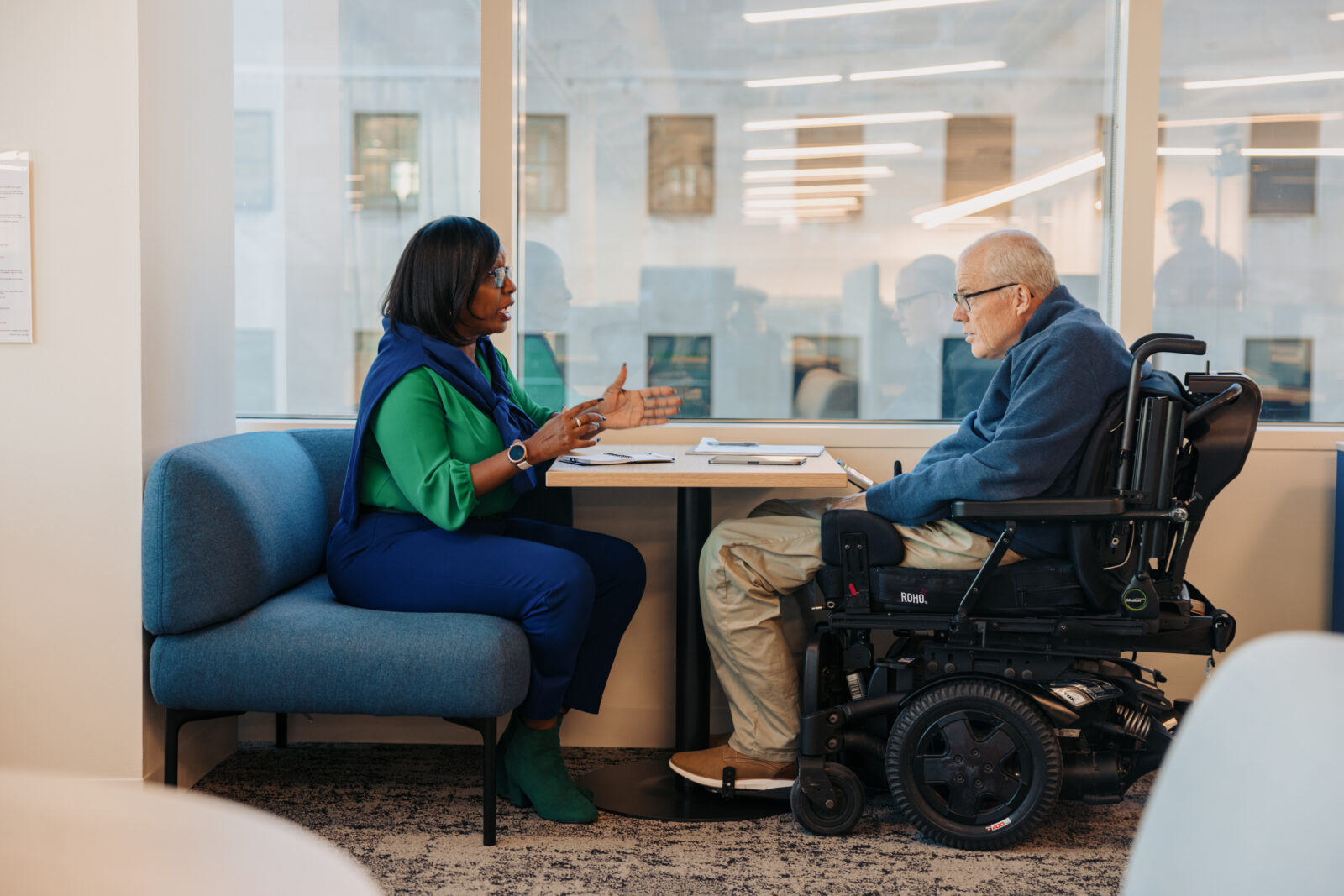
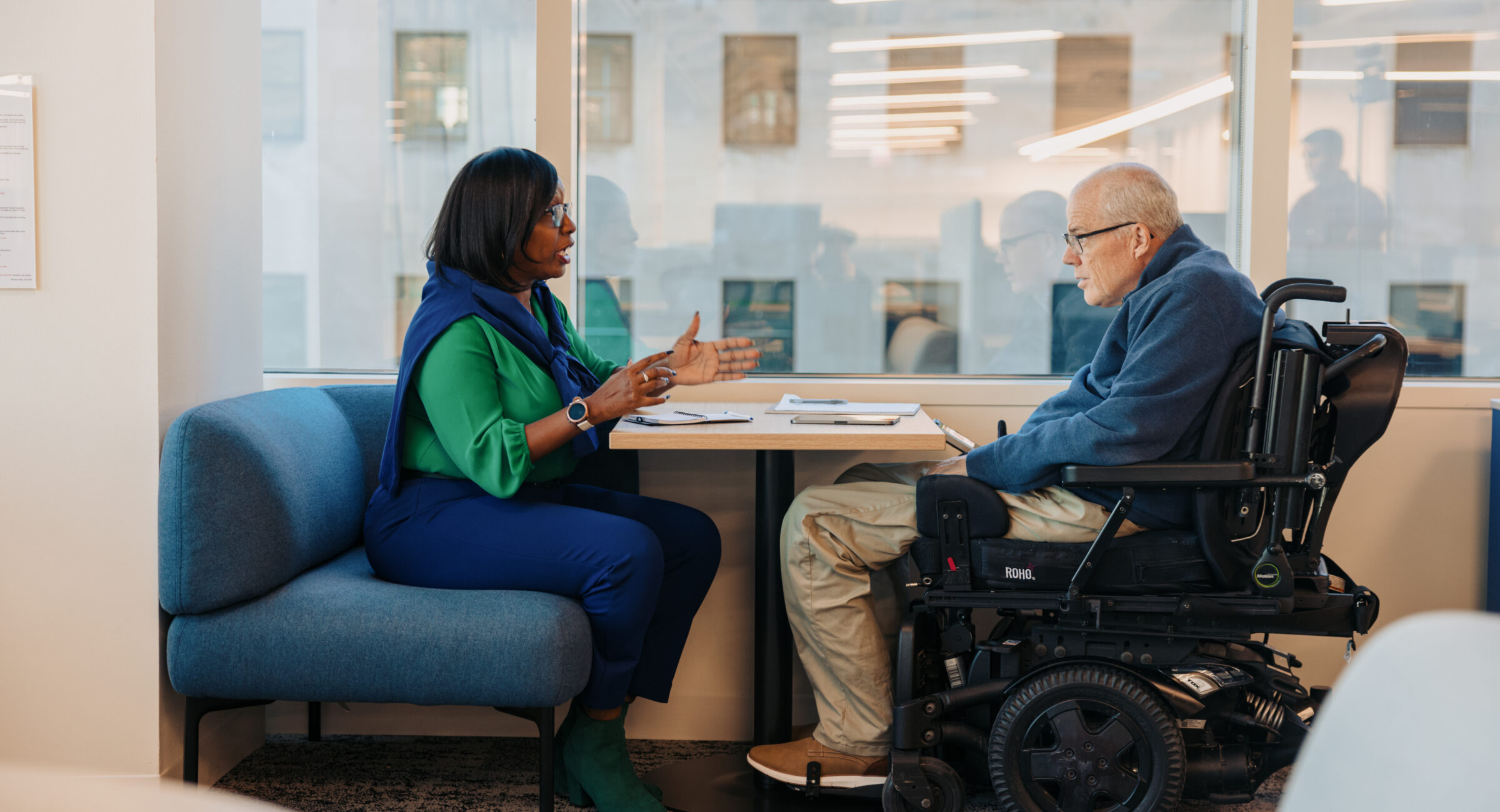
Two disabled people converse and sit across from each other at a table with pens and notebooks on top of it. One uses a power wheelchair; a tablet is on the table in front of them. Photo by Jordan Nicholson for Disability:IN.